AI Automation Case Study: How a Logistics Company Achieved 30% Cost Reduction
Table Of Contents
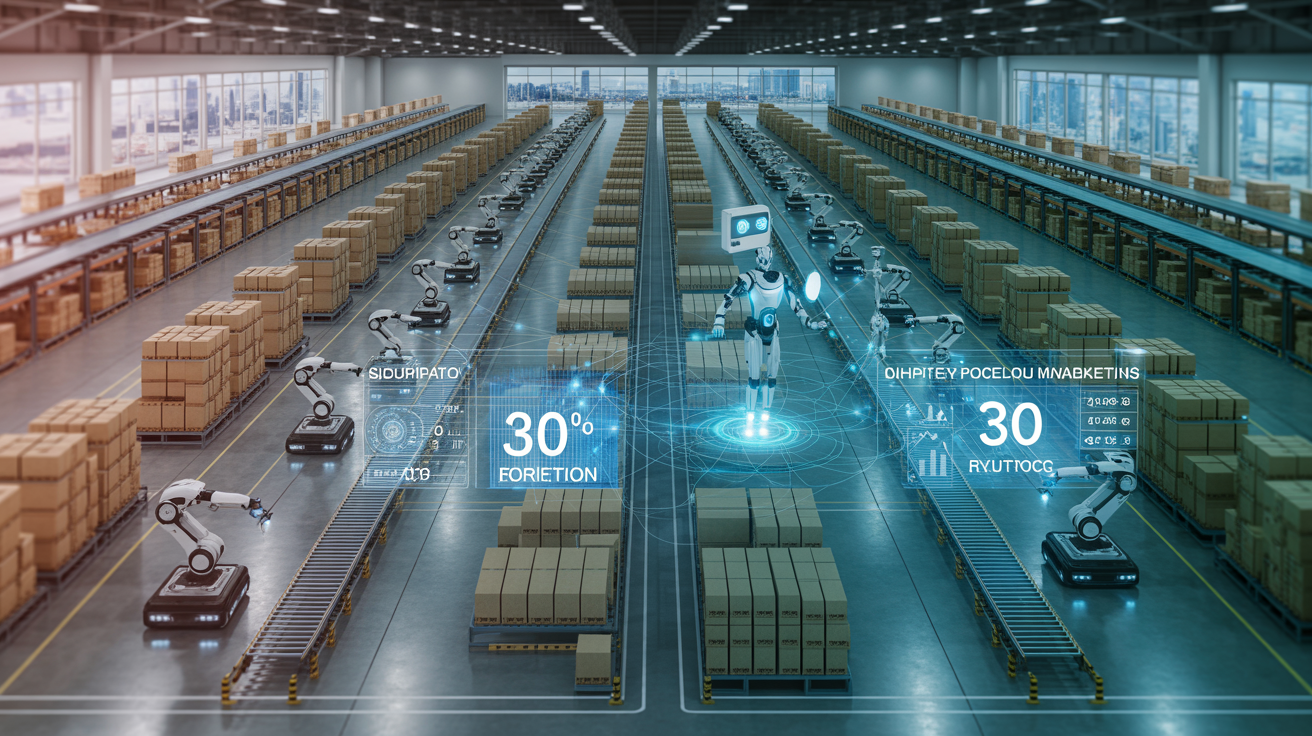
In today’s competitive business landscape, logistics companies face mounting pressures to reduce costs while maintaining service quality. For many organizations, achieving significant cost reductions without compromising operations seems like an impossible task. However, one Singapore-based logistics provider defied these expectations by leveraging artificial intelligence automation to achieve a remarkable 30% reduction in operational costs.
This case study examines how strategic implementation of AI automation transformed their logistics operations across warehouse management, route optimization, inventory forecasting, and customer service. We’ll explore the specific technologies deployed, implementation methodology, challenges overcome, and the measurable results that contributed to their cost-cutting success.
By analyzing this real-world example, business leaders will gain valuable insights into how AI automation can be effectively deployed to drive substantial cost savings while simultaneously improving service quality and operational efficiency in logistics operations.
Company Background and Challenges
The subject of our case study is a mid-sized logistics company based in Singapore with operations across Southeast Asia. With over 500 employees, a fleet of 150 delivery vehicles, and three warehouses, the company handles approximately 15,000 shipments daily for e-commerce, retail, and manufacturing clients.
Despite steady growth, the company faced several critical challenges that threatened its profitability and competitive position in the market:
- Rising operational costs, particularly in labor, fuel, and warehouse management, which were increasing at 12% annually
- Inefficient manual processes leading to errors in inventory management and shipping
- Suboptimal delivery routes resulting in excess fuel consumption and longer delivery times
- Difficulties in accurately forecasting inventory requirements, leading to overstocking and stockouts
- Customer service bottlenecks during peak periods, impacting satisfaction scores
The company’s leadership recognized that traditional cost-cutting approaches—such as workforce reduction or service scope limitations—would likely damage service quality and market position. Instead, they sought a solution that would simultaneously reduce costs while enhancing operational capabilities and customer experience.
After consulting with technology partners and industry experts, the leadership team identified AI automation as the most promising pathway to achieve their ambitious cost reduction targets while improving service delivery.
The AI Automation Solution
Rather than implementing a single AI system, the company adopted a strategic, multi-phased approach to automation. This comprehensive strategy targeted the most cost-intensive and inefficient aspects of their operations, creating an integrated ecosystem of AI-powered solutions working in concert.
Key Technologies Implemented
The AI automation initiative centered around four core technology implementations:
1. Intelligent Warehouse Management System (IWMS): The company deployed an AI-powered warehouse management system that utilized computer vision, robotics, and predictive analytics. This system automated inventory tracking, optimized storage allocation, and streamlined picking and packing processes. The IWMS incorporated machine learning algorithms that continuously improved warehouse operations by analyzing patterns and identifying optimization opportunities.
2. Dynamic Route Optimization: A sophisticated route optimization system was implemented to replace the previous manual route planning process. This AI solution analyzed multiple variables including traffic patterns, weather conditions, delivery time windows, vehicle capacity, and package characteristics to create optimal delivery routes in real-time. The system adapted continuously throughout the day, rerouting vehicles as conditions changed.
3. Predictive Inventory Management: The company integrated an AI-based forecasting system that analyzed historical data, market trends, seasonal patterns, and client-specific variables to accurately predict inventory requirements. This reduced carrying costs while minimizing stockouts. The system’s machine learning capabilities enabled it to improve prediction accuracy over time.
4. AI-Powered Customer Service Platform: To address customer service challenges, the company implemented an intelligent customer service platform incorporating chatbots, natural language processing, and automated tracking notifications. This system could handle routine inquiries, provide real-time shipment updates, and identify patterns in customer issues that required human intervention.
Implementation Process
The implementation followed a carefully structured approach to minimize disruption while maximizing adoption and results:
Phase 1: Assessment and Planning (2 months)
The first phase involved comprehensive process mapping and data collection to identify the highest-impact opportunities for AI automation. The company conducted a detailed ROI analysis for each potential implementation area, prioritizing projects based on expected cost reduction impact, implementation complexity, and time to value.
Phase 2: Pilot Implementation (3 months)
Rather than a company-wide rollout, the team began with pilot implementations in controlled environments. The route optimization system was tested with 15% of delivery vehicles, while the warehouse management system was deployed in one section of their primary warehouse. These limited deployments allowed for testing, refinement, and demonstration of value before broader implementation.
Phase 3: Training and Change Management (Ongoing)
Recognizing that employee adoption would be critical to success, the company invested significantly in training programs and change management. This included AI leadership training for management and supervisory staff, technical training for operations teams, and continuous communication about the benefits and impacts of the new systems.
Phase 4: Full-Scale Deployment (6 months)
Following successful pilots, the company deployed the technologies across all operations in a carefully sequenced manner. The implementation team established clear metrics to track performance and quickly address any issues that emerged during the transition.
Phase 5: Optimization and Integration (Ongoing)
After initial implementation, the focus shifted to optimizing the individual systems and improving integration between them. This phase involved fine-tuning algorithms, enhancing data flows between systems, and developing more sophisticated analytics dashboards for management oversight.
Results and Cost Reduction Breakdown
Within 12 months of full implementation, the company achieved its target of 30% overall cost reduction in logistics operations. This significant achievement was accompanied by improvements in service quality, accuracy, and customer satisfaction.
Operational Efficiency Gains
The AI automation initiative delivered substantial operational improvements across all areas of implementation:
Warehouse Operations:
- 48% reduction in order picking time
- 62% decrease in inventory counting errors
- 37% improvement in warehouse space utilization
- 29% increase in throughput capacity without physical expansion
Delivery Operations:
- 22% reduction in average delivery route distance
- 18% increase in deliveries per vehicle per day
- 34% decrease in late deliveries
- 41% reduction in route planning time
Inventory Management:
- 32% reduction in excess inventory
- 68% decrease in stockout incidents
- 43% improvement in inventory turnover ratio
- 52% more accurate demand forecasting
Customer Service:
- 74% of routine inquiries successfully handled by AI without human intervention
- 63% reduction in response time for customer inquiries
- 26% improvement in customer satisfaction scores
- 38% decrease in order tracking related calls
Cost Savings Analysis
The 30% overall cost reduction was distributed across several key operational areas:
Labor Cost Reductions (12% of total savings): The automation of routine tasks reduced labor requirements for picking, packing, sorting, and administrative functions. Importantly, the company implemented a no-layoff policy, instead redeploying staff to higher-value customer service and operational oversight roles while reducing new hiring and overtime expenses.
Transportation Cost Reductions (9% of total savings): The route optimization system significantly reduced fuel consumption, vehicle maintenance, and driver overtime. By maximizing vehicle capacity utilization and minimizing route distances, the company achieved substantial transportation savings without compromising delivery times.
Inventory Cost Reductions (7% of total savings): Improved forecasting accuracy reduced both excess inventory carrying costs and the expenses associated with expedited procurement to address stockouts. The company was able to reduce average inventory levels by 27% while improving product availability.
Error and Returns Reduction (2% of total savings): By reducing picking errors, shipping mistakes, and delivery failures, the company decreased the substantial costs associated with returns processing, reshipping, and customer compensation for errors.
The cost savings were partially offset by technology investment and ongoing maintenance costs, but the company still achieved a 267% ROI on their AI automation investment within the first 12 months, with increasing returns projected for subsequent years as the systems continued to optimize.
Implementation Challenges and Solutions
While the AI automation initiative was ultimately successful, the company encountered several significant challenges during implementation that required thoughtful solutions:
Data Quality and Integration Issues
The effectiveness of AI systems depends heavily on the quality and accessibility of data. The company discovered that much of their historical data was inconsistent, siloed, or incomplete. To address this challenge, they:
- Established a dedicated data cleaning and preparation team prior to full implementation
- Implemented standardized data collection protocols across all operations
- Developed custom API connectors between legacy systems and new AI platforms
- Created a unified data warehouse to serve as a single source of truth for all AI applications
Employee Resistance and Adoption
Initial employee resistance to the new technologies posed a significant challenge. Many staff members were concerned about job security or struggled to adapt to new workflows. The company addressed this through:
- Clear communication about the no-layoff policy and future workforce plans
- Involving operational staff in the design and testing of new systems
- Comprehensive training programs customized to different roles and learning styles
- Implementing a coaching program to support employees during the transition
Algorithm Refinement and Edge Cases
The initial AI models performed well for standard operations but struggled with unusual situations or edge cases. The company addressed this by:
- Implementing a phased approach that allowed for algorithm refinement
- Creating clear protocols for human intervention when AI systems encountered unusual scenarios
- Developing feedback loops where human decisions informed future AI responses
- Building a library of edge cases to improve algorithm training and testing
Integration with Customer Systems
The company’s logistics operations interfaced with diverse customer systems, creating integration challenges for the new AI platforms. This was addressed through:
- Developing a flexible API architecture that could accommodate various customer systems
- Creating standardized data exchange formats while supporting legacy formats where required
- Implementing a customer onboarding process for integration with the new systems
- Providing technical support resources to assist customers with connection issues
Key Lessons and Best Practices
The company’s successful implementation of AI automation yielded valuable insights that can benefit other organizations considering similar initiatives:
Strategic Focus on Value Drivers
Rather than implementing AI for its own sake, the company maintained a disciplined focus on specific operational pain points and cost drivers. They prioritized applications with clear ROI potential and measurable outcomes, ensuring that technology investments directly addressed business objectives.
Balanced Approach to Human-Machine Collaboration
The most successful aspects of the implementation were those that effectively combined AI capabilities with human expertise. By focusing on automating routine, repetitive tasks while elevating human roles to more strategic functions, the company achieved better results than either humans or machines could accomplish independently. This approach also helped with employee acceptance and utilization of emotional intelligence in customer-facing roles.
Data Foundation is Critical
The company learned that establishing a solid data foundation was essential for AI success. Their initial investments in data cleaning, integration, and governance paid significant dividends in algorithm performance and system reliability. Organizations considering AI implementation should assess and address data quality issues before proceeding with automation.
Phased Implementation Reduces Risk
The pilot-based, phased approach to implementation allowed the company to identify and address issues early, demonstrate value to stakeholders, and refine their approach before full-scale deployment. This significantly reduced implementation risk and improved ultimate adoption rates.
Change Management Determines Success
The company’s substantial investment in change management—including training, communication, and coaching—was critical to their success. Technical implementation alone would have failed without corresponding efforts to help employees adapt to new systems and processes. By fostering a culture of creative and critical thinking, employees were empowered to contribute to continuous improvement.
Continuous Optimization Yields Compounding Returns
The company discovered that AI system performance improved substantially over time with continued attention and refinement. By establishing processes for ongoing optimization and creating feedback loops for continuous learning, they achieved better results in month twelve than in month one, with this trend expected to continue.
Conclusion
This case study demonstrates how strategic implementation of AI automation can deliver transformative results in logistics operations. The company’s achievement of 30% cost reduction—while simultaneously improving service quality and operational capabilities—illustrates the potential of these technologies when implemented with a thoughtful, comprehensive approach.
Several factors were critical to their success:
First, the company approached automation strategically, targeting specific operational pain points rather than implementing technology for its own sake. Second, they recognized the importance of data quality and invested accordingly. Third, they implemented a phased approach that allowed for learning and refinement. Finally, they prioritized change management and human factors alongside technical implementation.
For logistics companies and other organizations considering similar initiatives, this case study provides a valuable roadmap. It demonstrates that significant cost reductions are achievable without compromising quality when AI automation is implemented thoughtfully and comprehensively. With proper planning, execution, and ongoing optimization, AI automation can transform logistics operations from a cost center into a competitive advantage.
As AI technologies continue to evolve, the potential for further optimization and cost reduction remains substantial. Organizations that develop the capabilities to effectively implement and manage these technologies now will be well-positioned to achieve continued competitive advantage in the future.
Ready to Transform Your Business with AI Automation?
At Service Quality Centre, we help organizations develop the leadership capabilities, technical skills, and change management approaches needed for successful AI implementation. Our expert consultants and comprehensive training programs can guide your team through every stage of your AI transformation journey.
Learn more about our AI for Business Leaders certification and other programs designed to prepare your organization for the future of work.