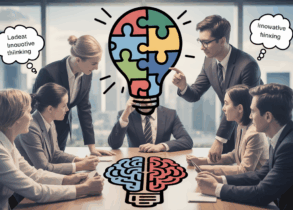
Design Thinking vs Critical Thinking: Key Differences and How to Apply Both in the Workplace
Table Of Contents
- Introduction to Thinking Methodologies
- What is Design Thinking?
- What is Critical Thinking?
- Key Differences Between Design Thinking and Critical Thinking
- The Complementary Nature of Both Thinking Methods
- Practical Applications in the Workplace
- Developing Both Thinking Skills in Your Organization
- Conclusion: Balancing Design Thinking and Critical Thinking
In today’s complex business landscape, the ability to approach problems from multiple angles has become a vital organizational competency. Two methodologies stand at the forefront of effective problem-solving: design thinking and critical thinking. While both approaches aim to solve problems, they operate from fundamentally different perspectives and serve distinct purposes in the workplace.
For professionals and organizations striving to navigate challenges effectively, understanding the nuances between these two thinking frameworks is essential. Design thinking emphasizes innovation through empathy and experimentation, while critical thinking focuses on logical analysis and evaluation of information. Together, they form a powerful toolkit for addressing the full spectrum of workplace challenges.
In this comprehensive guide, we’ll explore the fundamental differences between design thinking and critical thinking, examine how each methodology works, and provide practical insights into when and how to apply them in professional contexts. By the end, you’ll have a clearer understanding of how to leverage both approaches to enhance decision-making, problem-solving, and innovation in your organization.
What is Design Thinking?
Design thinking is a human-centered approach to innovation and problem-solving that draws inspiration from the designer’s toolkit. Developed and popularized by IDEO and Stanford’s d.school, this methodology places humans at the center of the process, focusing on understanding user needs before developing solutions.
At its core, design thinking is optimistic and action-oriented, believing that through empathy and iterative processes, we can develop better solutions to complex problems. Unlike traditional problem-solving approaches that begin with analyzing an existing issue, design thinking starts with understanding the human context and needs surrounding the problem.
The Design Thinking Process
The design thinking methodology typically follows a five-stage process:
- Empathize: Gain deep understanding of user needs through observation, engagement, and immersion in their experiences.
- Define: Articulate the core problem based on user insights, creating a clear problem statement.
- Ideate: Generate a wide range of creative solutions without judgment or limitations.
- Prototype: Build representations of potential solutions to test and refine ideas.
- Test: Evaluate prototypes with users, gather feedback, and iterate based on learnings.
This process is inherently non-linear, with practitioners often moving back and forth between stages as new insights emerge. The iterative nature allows for continuous refinement of both the problem definition and potential solutions.
Key Characteristics of Design Thinking
Design thinking is distinguished by several fundamental characteristics:
Human-centered: Deeply rooted in understanding human needs and experiences, design thinking begins with empathy rather than technical constraints.
Collaborative: It thrives on diverse perspectives, often bringing together multidisciplinary teams to generate more innovative solutions.
Experimental: Rather than aiming for perfection from the start, design thinking encourages rapid prototyping and testing to learn quickly from failures and successes.
Optimistic: Design thinking maintains a belief that even the most complex problems have solutions and that innovation is possible regardless of constraints.
Ambiguity-tolerant: The process embraces uncertainty, especially in early stages, allowing for exploration beyond obvious solutions.
What is Critical Thinking?
Critical thinking is a disciplined, systematic approach to analyzing, evaluating, and reconstructing thought. It involves the careful examination of information, arguments, and evidence to form well-reasoned judgments. Where design thinking embraces possibilities, critical thinking scrutinizes them with logical precision.
As a cognitive process, critical thinking enables individuals to make more rational decisions by filtering out biases, questioning assumptions, and assessing the validity of information. It represents the analytical counterpart to design thinking’s creative emphasis.
The Critical Thinking Process
While there isn’t a single universally accepted critical thinking process, it typically involves these key steps:
- Identify: Recognize the problem or question that needs to be addressed.
- Research: Gather relevant information and evidence from reliable sources.
- Analyze: Break down complex information into component parts and examine relationships.
- Evaluate: Assess the credibility, relevance, and significance of information and arguments.
- Infer: Draw logical conclusions based on the evidence and analysis.
- Consider alternatives: Explore different perspectives and potential solutions.
- Decide: Make a reasoned judgment or decision based on the evaluation.
Critical thinking is methodical and evidence-based, with each step building on the previous one to create a sound logical foundation for decisions and conclusions.
Key Characteristics of Critical Thinking
Analytical: Critical thinking dissects complex issues into manageable components to understand underlying structures and relationships.
Evidence-based: Decisions and conclusions are grounded in verifiable facts and credible information rather than assumptions or emotions.
Logical: The process follows principles of valid reasoning, avoiding logical fallacies and cognitive biases.
Reflective: Critical thinkers continuously examine their own thought processes and consider how their biases might influence their conclusions.
Skeptical: A healthy questioning of claims and arguments is fundamental, requiring substantiation before acceptance.
Objective: Critical thinking strives to separate facts from opinions and to evaluate information independently of personal preferences.
At SQC’s Creative and Critical Thinking course, professionals learn to apply these characteristics to workplace challenges, developing stronger analytical capabilities for complex problem-solving.
Key Differences Between Design Thinking and Critical Thinking
Understanding the distinctions between these two thinking methodologies helps organizations apply them appropriately:
Orientation and Starting Point:
Design thinking begins with human needs and experiences, asking “What do people need?” before determining solutions. Critical thinking typically starts with a problem or claim that requires evaluation, asking “Is this valid or true?”
Approach to Solutions:
Design thinking generates multiple potential solutions through divergent thinking before converging on the most promising options. Critical thinking evaluates existing solutions or propositions against established criteria and evidence.
Relationship with Ambiguity:
Design thinking embraces ambiguity and uncertainty, particularly in early stages, as fertile ground for innovation. Critical thinking seeks to reduce ambiguity through analysis and clarification to reach definitive conclusions.
Risk Tolerance:
Design thinking encourages taking risks through rapid prototyping and testing, viewing failures as learning opportunities. Critical thinking tends to be more risk-averse, carefully evaluating potential outcomes before taking action.
Timeline and Process:
Design thinking often follows a non-linear, iterative process that can loop back to earlier stages as new insights emerge. Critical thinking typically follows a more sequential process, building logical arguments step by step.
Ultimate Goal:
Design thinking aims to create novel, user-centered solutions that may not have existed before. Critical thinking focuses on reaching sound judgments and decisions based on rigorous evaluation of existing information.
The Complementary Nature of Both Thinking Methods
Despite their differences, design thinking and critical thinking are complementary rather than opposing methodologies. When used together, they create a powerful approach to problem-solving that balances innovation with analytical rigor.
Consider how these methodologies can work together throughout a project lifecycle:
Problem Definition: Design thinking’s empathetic approach helps identify the right problems to solve by understanding user needs, while critical thinking ensures the problem is accurately defined and contextualized.
Idea Generation: Design thinking encourages creative, boundary-pushing ideas, while critical thinking helps evaluate their feasibility and potential implications.
Solution Development: Design thinking’s prototyping approach creates tangible solutions to test, while critical thinking provides frameworks to assess their effectiveness objectively.
Implementation: Design thinking’s user-centered approach ensures solutions remain focused on human needs, while critical thinking identifies potential implementation challenges and develops mitigation strategies.
Organizations that cultivate both thinking styles are better equipped to navigate complex challenges, combining innovation with sound judgment. As demonstrated in SQC’s Emotional Intelligence course, balancing different cognitive approaches enhances workplace effectiveness.
Practical Applications in the Workplace
Understanding when and how to apply each thinking methodology can significantly enhance organizational problem-solving capabilities.
When to Apply Design Thinking
Design thinking is particularly valuable in these workplace scenarios:
Innovation Challenges: When developing new products, services, or business models, design thinking’s human-centered approach ensures solutions address genuine needs.
Customer Experience Improvements: For enhancing how customers interact with your organization, design thinking provides insights into pain points and opportunities.
Complex, Ill-Defined Problems: When facing challenges without clear parameters or solutions, design thinking helps navigate ambiguity and discover new possibilities.
Cross-Functional Collaboration: Design thinking workshops can break down silos and generate alignment around shared objectives and user-centered solutions.
Organizational Change Initiatives: When implementing change, design thinking can help address employee concerns and create more effective transition strategies.
When to Apply Critical Thinking
Critical thinking excels in these workplace contexts:
Decision-Making: When evaluating options with significant implications, critical thinking ensures decisions are based on sound reasoning rather than bias or emotion.
Problem Analysis: For diagnosing the root causes of existing problems, critical thinking’s analytical approach helps identify underlying factors.
Information Evaluation: In data-rich environments, critical thinking helps distinguish relevant from irrelevant information and assess the quality of evidence.
Risk Assessment: When evaluating potential risks and developing mitigation strategies, critical thinking provides a structured approach to anticipating challenges.
Performance Evaluation: For assessing the effectiveness of initiatives or employee performance, critical thinking ensures fair and objective analysis.
Leaders who master critical thinking are better positioned to guide their teams through complex decision-making processes, as taught in SQC’s coaching programs.
Benefits of an Integrated Approach
Organizations that intentionally cultivate both thinking methodologies experience several advantages:
More Comprehensive Problem-Solving: Teams can both generate innovative solutions and rigorously evaluate them, creating a balanced approach.
Reduced Risk of Innovation Failures: Design thinking generates user-centered ideas while critical thinking helps identify potential implementation challenges before they arise.
Enhanced Decision-Making Quality: Decisions benefit from both creative exploration of possibilities and analytical assessment of options.
Improved Adaptability: Teams skilled in both methodologies can pivot between creative and analytical modes as situations demand.
Greater Cognitive Diversity: Valuing both thinking styles creates space for different cognitive approaches, enriching the organization’s problem-solving capabilities.
As businesses increasingly face complex challenges requiring both innovation and analytical rigor, developing capabilities in both thinking methodologies becomes a strategic advantage, particularly in evolving fields like AI strategy and implementation covered in SQC’s AI for Business Leaders certification.
Developing Both Thinking Skills in Your Organization
To build organizational capabilities in both design thinking and critical thinking, consider these strategic approaches:
Integrated Training Programs: Develop learning initiatives that explicitly teach both methodologies and how they complement each other. This creates a common language and toolkit for approaching problems.
Cross-Functional Teams: Intentionally form teams with members who excel in different thinking styles, creating natural opportunities for knowledge sharing and collaborative problem-solving.
Structured Problem-Solving Processes: Establish frameworks that incorporate elements of both design thinking and critical thinking at appropriate stages, guiding teams to apply the right approach at the right time.
Leadership Modeling: Ensure leaders demonstrate the value of both thinking styles by explicitly shifting between creative exploration and analytical evaluation based on the context.
Reflection Practices: Implement after-action reviews that examine not just outcomes but the thinking processes used, highlighting how different approaches contributed to success or could have improved results.
Tools and Resources: Provide practical tools for both methodologies—design thinking canvases, empathy maps, and user journey tools alongside critical thinking frameworks, decision matrices, and evaluation criteria.
Organizations that invest in developing these complementary thinking capabilities create a sustainable advantage in problem-solving and innovation. By balancing human-centered design with analytical rigor, teams can address the full spectrum of workplace challenges more effectively.
Conclusion: Balancing Design Thinking and Critical Thinking
The most effective organizations don’t view design thinking and critical thinking as competing approaches but as complementary tools in their problem-solving arsenal. Each methodology brings distinct strengths to the table: design thinking offers human-centered innovation and creative exploration, while critical thinking provides analytical rigor and sound evaluation.
By understanding the fundamental differences between these approaches and recognizing when each is most appropriate, professionals can develop a more nuanced and effective approach to workplace challenges. The goal isn’t to choose one thinking style over the other, but to develop fluency in both and the wisdom to know which to apply in different contexts.
As workplace challenges grow increasingly complex, the ability to seamlessly integrate both methodologies becomes a valuable competitive advantage. Organizations that cultivate this dual capability position themselves to not only solve today’s problems more effectively but also to anticipate and address tomorrow’s challenges with confidence and creativity.
Developing these complementary thinking skills is an ongoing journey that requires intentional practice and application across diverse situations. By investing in both creative and analytical capabilities, individuals and organizations can unlock new levels of innovation, decision-making quality, and problem-solving effectiveness.
Develop Your Team’s Thinking Skills with SQC
Ready to enhance your organization’s problem-solving capabilities through design thinking and critical thinking? Service Quality Centre offers specialized training programs to help your team develop both creative and analytical thinking skills.
Our expert facilitators provide practical, workplace-focused training that translates into immediate performance improvements. Learn more about our comprehensive thinking skills programs and how they can benefit your organization.